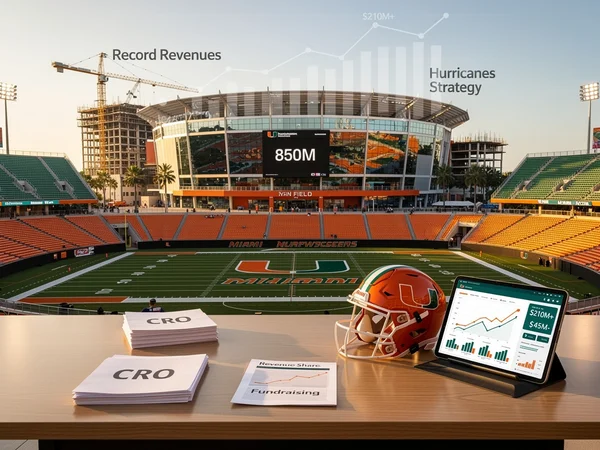
In a move blending personal roots with professional ambition, Jesse Marks, Northwestern University’s Chief Revenue Officer, is returning to his alma mater, the University of Miami, to assume the same role for the Hurricanes athletic department. The news, first reported by journalist Matt Fortuna on X, underscores the intensifying competition for revenue talent amid college athletics’ seismic shifts toward revenue-sharing and NIL collectives.
Marks, a South Florida native with bachelor’s and master’s degrees in political science and sports administration from Miami, steps back into familiar territory. His departure from Evanston comes after a whirlwind tenure where he spearheaded key infrastructure projects, including oversight of the $850 million Ryan Field rebuild and the temporary lakeside Northwestern Medicine Field at Martin Stadium, which generated record revenues in the 2024 football season, according to Northwestern Athletics .
Appointed Northwestern’s inaugural CRO in April 2025, Marks had risen quickly since joining in 2021 as Deputy Director of Athletics for Development. Sports Business Journal noted his promotion from Deputy AD and Assistant VP/Development, positioning him to oversee all revenue-generating functions while maintaining a leadership stake in the new Ryan Field project.
Advertisement
article-ad-01From Hurricane Club to Dolphins Foundation
Prior to Northwestern, Marks built a formidable track record in South Florida. As Senior Associate Athletic Director for Development at Miami from 2016 to 2019, he led the Hurricane Club, raising over $210 million for facility upgrades like the Schwartz Center for Athletic Excellence and Carol Soffer Indoor Practice Facility, as detailed on Northwestern Athletics staff bio . Major giving surged more than 70% under his watch, from $14 million in 2010 to a peak of $49 million in 2016-17, per University of Miami Athletics .
Marks then served as Executive Director of the Miami Dolphins Foundation from 2019 to 2021, orchestrating the Dolphins Cancer Challenge that amassed over $45 million for cancer research. The Miami Dolphins praised his ‘impressive track record of success’ and ‘longstanding relationships throughout South Florida’ in their announcement, highlighting his passion for community impact.
Earlier stops included Associate AD for Development at Miami starting in 2012, Assistant AD for Major Gifts, and roles at Florida International University and Wake Forest University honing his fundraising acumen. In 2019, the South Florida Business Journal named him a Forty Under 40 honoree for his rising influence.
Northwestern’s C-Suite Gamble Pays Dividends
Northwestern Athletic Director Mark Jackson tapped Marks as part of a corporate-style executive overhaul. ‘We’re really going to build it like a C-suite model,’ Jackson told the Daily Northwestern in June 2025, citing Marks’ CRO role alongside hires like Chief Branding Officer Savanna Wood. Marks’ efforts extended to partnerships, such as the multi-year deal with Legends for premium seating and ticket sales at Ryan Field, where he noted their ‘robust sales, data analytics and proven facility development expertise’ in a Legends press release .
The lakeside stadium innovation drew national acclaim, hosting football while enabling other university events and boosting 2024 revenues to all-time highs. Roundtable.io credited Marks as ‘instrumental’ in these projects, timing his exit after much of the heavy lifting on Ryan Field, set to open in 2026 alongside the Kip and Sara Kirkpatrick Stadium for softball.
Inside NU called it ‘a big loss for the Wildcats,’ emphasizing Marks’ contributions since 2023 amid heightened recruiting via the transfer portal and NIL adaptations, including hiring General Manager Christian Sarkisian.
Miami’s Revenue Imperative in Revenue-Share Era
Miami’s hire arrives as programs grapple with the NCAA House settlement, mandating up to $20 million-plus in annual athlete revenue-sharing. The Hurricanes, fresh off a national title game appearance, boast powerhouse football but face revenue pressures. Their 2024 Legends partnership expansion handed sales and partnerships to Jason Layton as CRO under Legends College, achieving sponsorship highs, per Legends .
Marks’ return could integrate in-house leadership with external expertise, leveraging his prior Miami success and Dolphins ties. His focus on major gifts, annual funds, donor stewardship, and emerging streams like NIL positions him to navigate these changes, much as he did at Northwestern with revenue-share preparations.
Fortuna’s X post highlighted Marks’ Miami roots, suggesting a ‘full circle’ pull amid Northwestern’s commitment to swiftly replace him, given their investments in athletics infrastructure and Big Ten competitiveness.
Broader Implications for Athletic Departments
This personnel shuffle reflects college sports’ pivot to business-savvy executives. CRO roles, once rare, proliferate to unify ticketing, sponsorships, philanthropy, and NIL—streams vital post-settlement. Marks’ trajectory—from Hurricane Club growth to Dolphins philanthropy to Northwestern’s facilities boom—exemplifies the skill set demanded.
Northwestern’s staff directory still lists Marks, signaling a transition period, while Miami has yet to formally announce. Bleacher Report echoed the move, framing it against transfer portal frenzy, underscoring revenue’s role in roster-building.
For industry observers, Marks’ homecoming tests whether alma mater loyalty and proven fundraising translate to sustained Hurricanes dominance in a revenue arms race dominated by SEC and Big Ten giants.

LEAVE A REPLY
Your email address will not be published