Vocational Training: The New Success Track?
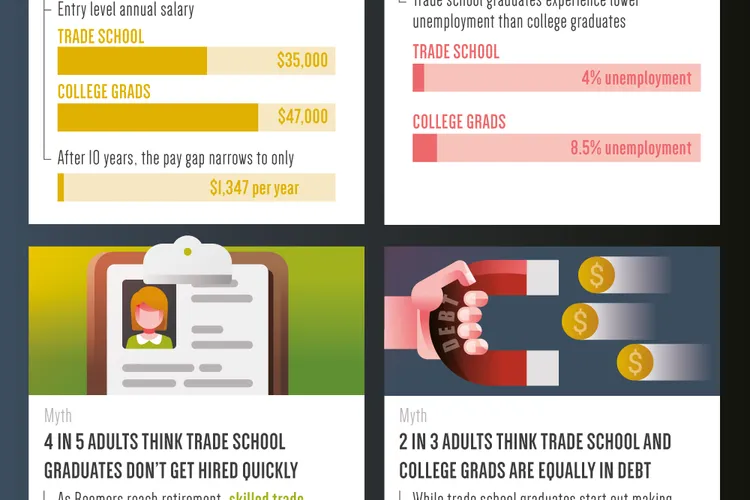
Success is an important reward for our hard work, and many people feel that it is part of their identities as a person. But recent generations are having to red

Known for clear analysis, Emily Chen follows retail operations and the people building it. They work through clear frameworks, case studies, and practical checklists to make complex topics approachable. They often cover how organizations respond to change, from process redesign to technology adoption. Readers appreciate their ability to connect strategic goals with everyday workflows. They examine how customer expectations evolve and how organizations adapt to meet them. They value transparent sourcing and prefer primary data when it is available. A recurring theme in their writing is how teams build repeatable systems and measure impact over time. They also highlight cultural factors that determine whether change sticks. They avoid buzzwords, focusing instead on outcomes, incentives, and the human side of technology. They explore how policies, markets, and infrastructure intersect to create second‑order effects. They believe good analysis should be specific, testable, and useful to practitioners. They tend to favor small experiments over sweeping predictions. They value transparency, practical advice, and honest uncertainty.
Success is an important reward for our hard work, and many people feel that it is part of their identities as a person. But recent generations are having to red

Internal audit evolves from compliance enforcer to strategic risk intelligence hub, harnessing AI and analytics to preempt financial threats and bolster resilience in volatile markets.

Palo Alto Networks launches quantum-safe security solution providing real-time cryptographic visibility to help enterprises protect against future quantum computing threats. The platform enables automated discovery and risk assessment of vulnerable encryption systems across global IT infrastructure.

Apple's long-standing dominance over TSMC is eroding as AI chip demand from Nvidia and AMD surges, driving TSMC's Q4 2025 revenue growth beyond expectations. While Apple reserves advanced nodes and boosts AI efforts, the shift toward AI diversification reduces its leverage, reshaping industry alliances and innovation funding.

Canadian PM Mark Carney firmly denied U.S. Treasury Secretary Scott Bessent's claim of backtracking on his Davos speech during a Trump call, standing by critiques of U.S. hegemony amid tariff threats over a China trade pact.

NSC's guide arms small businesses against elevated injury risks with wearables, AI frameworks, cutting preventable incidents costing up to $10,000 yearly per Pie Insurance data.

The Department of Homeland Security is compelling major technology companies to surrender user data on Trump critics, raising profound questions about surveillance powers, corporate compliance, and First Amendment protections in the digital age. This unprecedented campaign targets political speech through National Security Letters and administrative subpoenas, creating tensions between national security claims and civil liberties.

David and Larry Ellison's Paramount Skydance wages a $108B hostile bid for Warner Bros. Discovery, battling Netflix amid Trump alliances, CBS controversies, and industry headwinds. Larry guarantees $40B; Warner rejects as risky LBO.

Samsung's AICore service has become controversial as users discover it significantly drains battery life while running continuously in background. The hidden AI processing engine, designed to enhance device intelligence, is sparking debate about transparency and user control over resource-intensive features in modern smartphones.

In a high-stakes bid for 'digital sovereignty,' Europe is deploying a massive regulatory and industrial strategy to reduce its critical dependence on U.S. tech giants. Through landmark laws like the DMA and ambitious projects like Gaia-X, Brussels is fighting to control its digital future amid transatlantic data wars.

Huawei Cloud's 2026 partner policies, unveiled in Singapore, lock in three-year terms emphasizing trust, profits, simplicity, and growth amid AI boom. Backed by CloudMatrix and Pangu models, the strategy propelled 50% partner revenue surge in 2025.

NordVPN completes its sixth consecutive independent audit by Deloitte, confirming its zero-logs policy amid intensifying privacy scrutiny. The verification highlights industry trends toward verifiable transparency as regulatory pressure mounts and consumer skepticism grows regarding VPN privacy claims.
Advertisement
author-ad-01