




Wander With Wonder contains affiliate links and is a member of the Amazon Services LLC Associates Program. If you make a purchase using one of these Amazon or other affiliate links, we may receive compensation at no extra cost to you. See our Disclosure Policy for more information.
Planning a trip to Peru but don’t want the crowds in Cusco or Machu Picchu? Huaraz, north of Lima, offers some of the best hikes in Peru.
If you’re planning a trip to Peru, there are alternatives to the crowds in Cusco and Machu Picchu. Just north of Lima, the mountain town of Huaraz offers some of the best hikes in Peru.
In the Callejón de Huaylas valley, Huaraz is your home base to visit the unparalleled pre-Inca ruins at Chavín de Huantár. The Cordillera Blanca mountain range towers over Huaraz, the heart of Peru’s hiking and climbing scene. Foodies and hot spring lovers, keep reading for tips on Huaraz’s must-try dish and nearby geothermal springs!
History of the Region
Much older than Machu Picchu, Chavín de Huantár was an important religious center from 1200-500 BCE, though the site was inhabited since 3000 BCE. When you visit the archeological site, walk through the underground passageways, where you will get a sense of what the initiates of the Chavín cult went through. There are acoustic ducts where water was directed during ceremonies to create impressive soundscapes for initiates. Built separately from the acoustic system are almost two miles of underground drainage channels where archeologists have found human and animal bones and a curious array of metal objects.
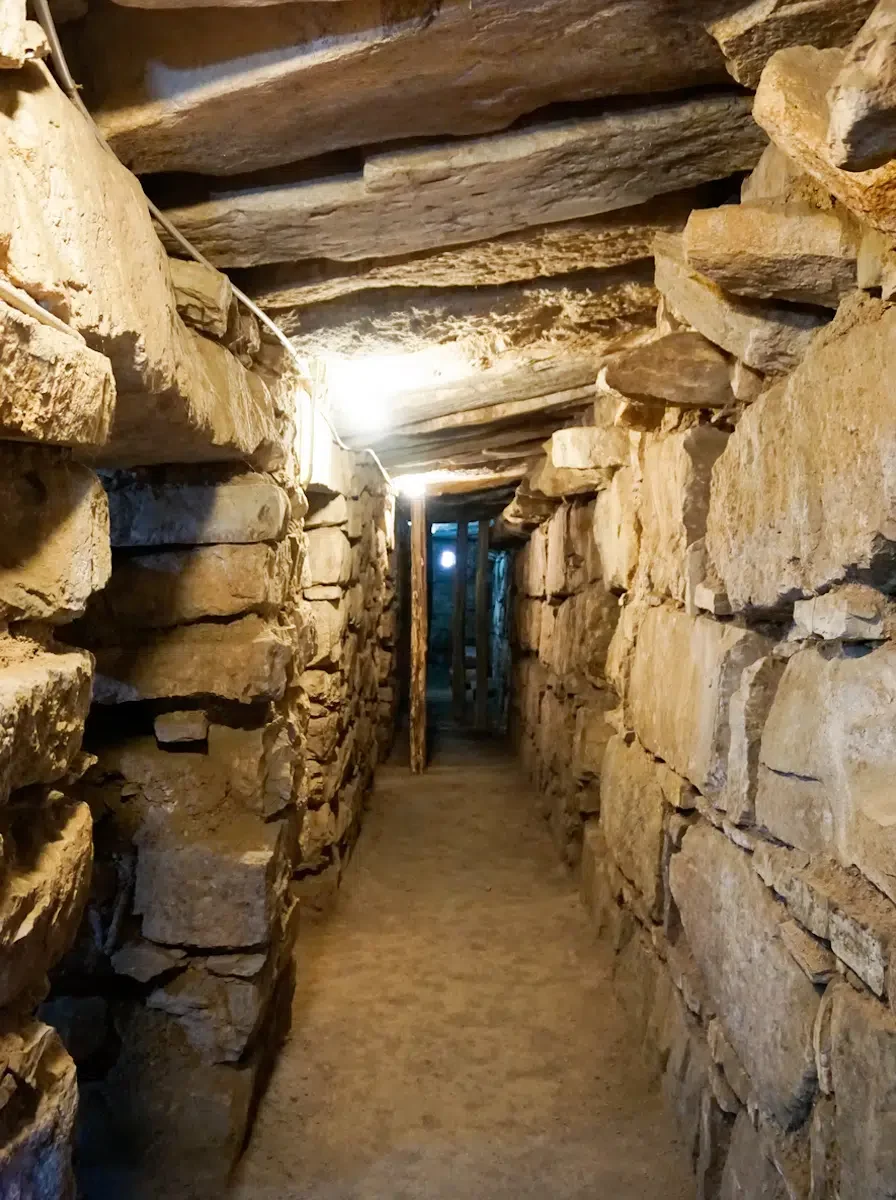
Underground ruins of the pre-Incan Chavín civilization in Chavín de Huantár, Peru. Photo by makasana via iStock by Getty Images
Mountains Near Huaraz Offer Best Hikes in Peru
As fascinating as Chavín is, most people come to Huaraz for the mountains. Even without leaving town, you will have a spectacular view of Huascarán, 22,205 feet above sea level. Don’t try running your first day in Huaraz because the town sits at over 10,000 feet.
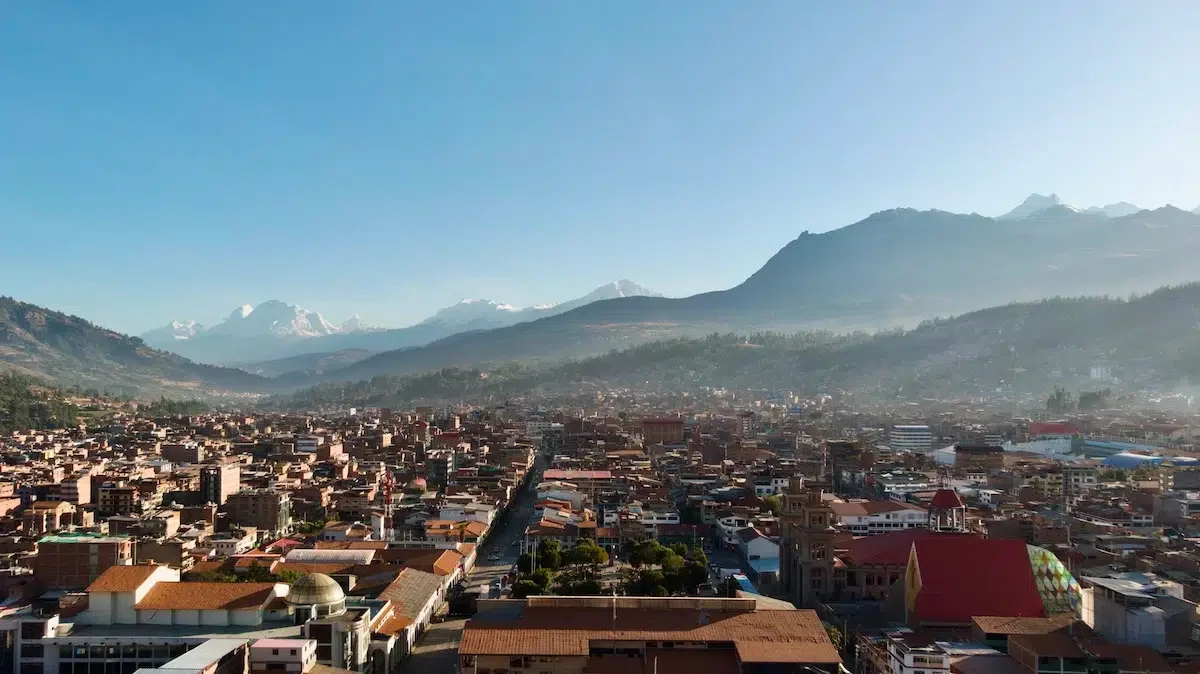
Huaraz with Huascaran on horizon. Photo by Heather Jasper
Pro tip: the best spot in town to get photos of the peaks that surround Huaraz is the roof of the Cultural Center on the Plaza de Armas.
With Huaraz as your base, you can make day tours to surrounding areas to get on some of the best hikes in Peru. I have detailed several of the most popular day tours in Huaraz. They are all long drives to beautiful glacial lakes with varying amounts of hiking.
Laguna Parón
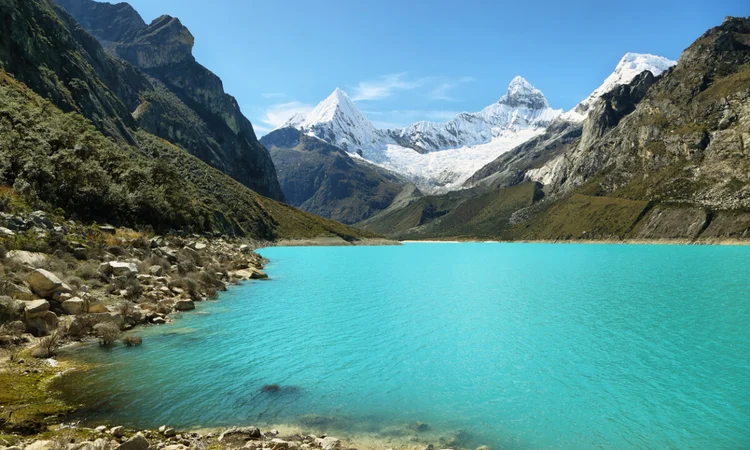
If you want to drive to a lake, start with the striking milky-turquoise Laguna Parón.
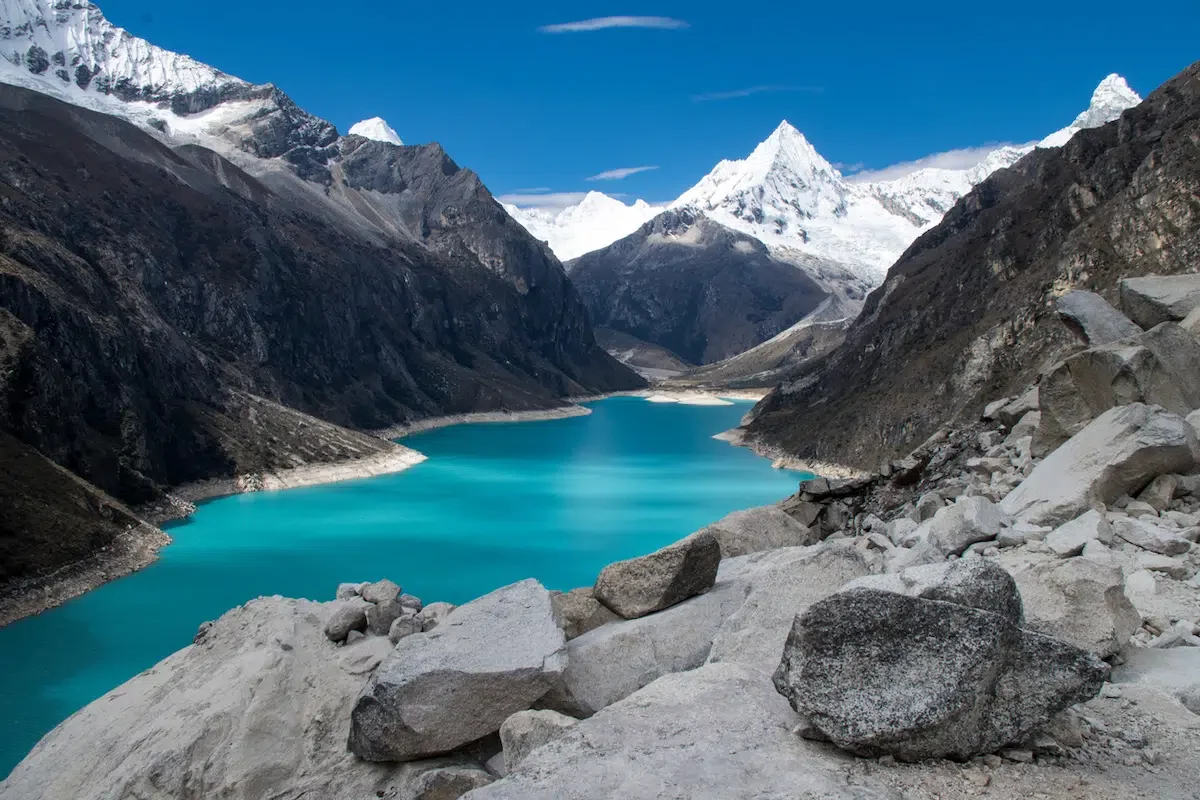
Panoramic view of Lake Parón in the Huascaran National Park, Peru. Photo by Adres Jacobi via iStock by Getty Images
Fun fact: “Laguna” is the Spanish word for lake not lagoon. In Peru, the word “lago” is used only for very large lakes.
Parón sits at 13,700 feet, so hanging out by the lake is plenty of activity for people new to high altitudes. You can rent a kayak or get a rowboat ride around the lake. If you want a bit of a hike, a mile-long trail takes you to a lookout over the lake. You can see six of the most famous peaks in the Cordillera Blanca.
Pastoruri Glacier
If you want a bit more of a hike and are interested in glaciers and giant flora, go to the Pastoruri Glacier. On your way to the glacier, you’ll stop to see naturally carbonated water bubbling up out of the valley floor and the Puya raimondii. They are the largest bromeliads in the world and can grow to a staggering 50 feet high. Just one Puya can produce up to 20,000 flowers. When you arrive at the glacier, keep your eyes on the cliffs above the trail to spot the endangered vicuña, a wild relative of the llama.
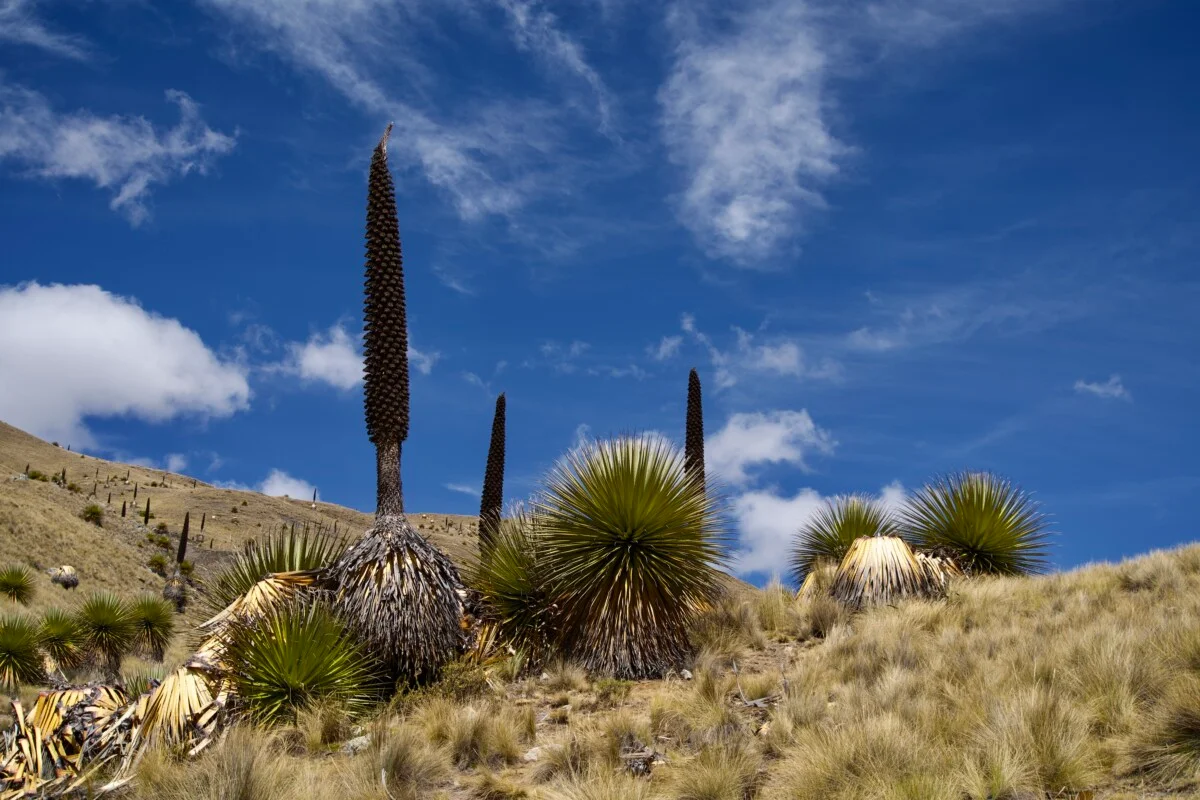
Puya raimondii are the world’s largest bromeliads. Photo by Heather Jasper
The trail to the Pastoruri Glacier is paved with rough stone and is just over two miles roundtrip. It’s an easy walk, except for the altitude, over 17,000 feet. The tour to Pastoruri was recently renamed “La Ruta del Cambio Climático,” the Route of Climate Change. The glacier is inside Huascarán National Park, and the park service has been increasingly alarmed at the rate at which Pastoruri is melting. It was a popular place to ski until the 1990s, and park officials now estimate the glacier could disappear in the next twenty years.
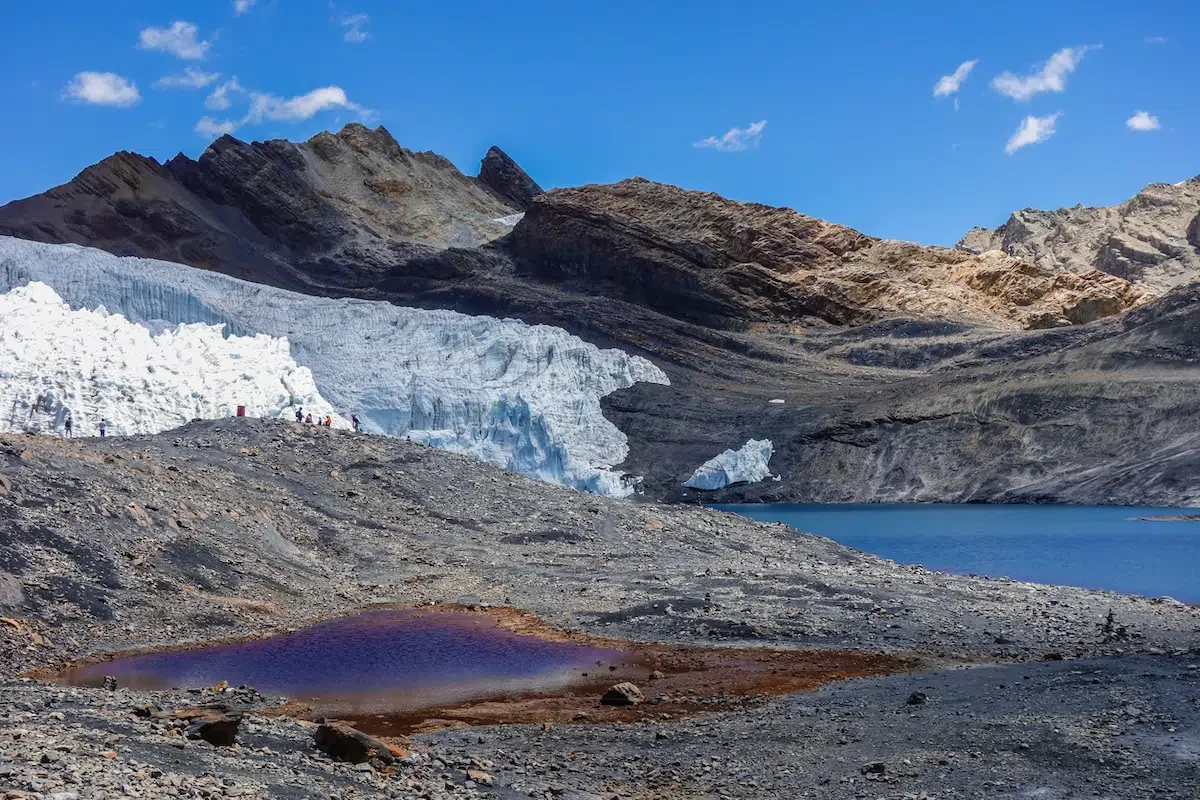
Pastoruri Glacier, at Huascaran National Park, Huaraz, Peru. Photo by caio acquesta via iStock by Getty Images
Laguna 69
Save the best for last and go to the famous Laguna 69 after acclimating to these high mountains. It’s a long hike, almost five miles each way, and you gain over 2,000 feet of elevation along the way.
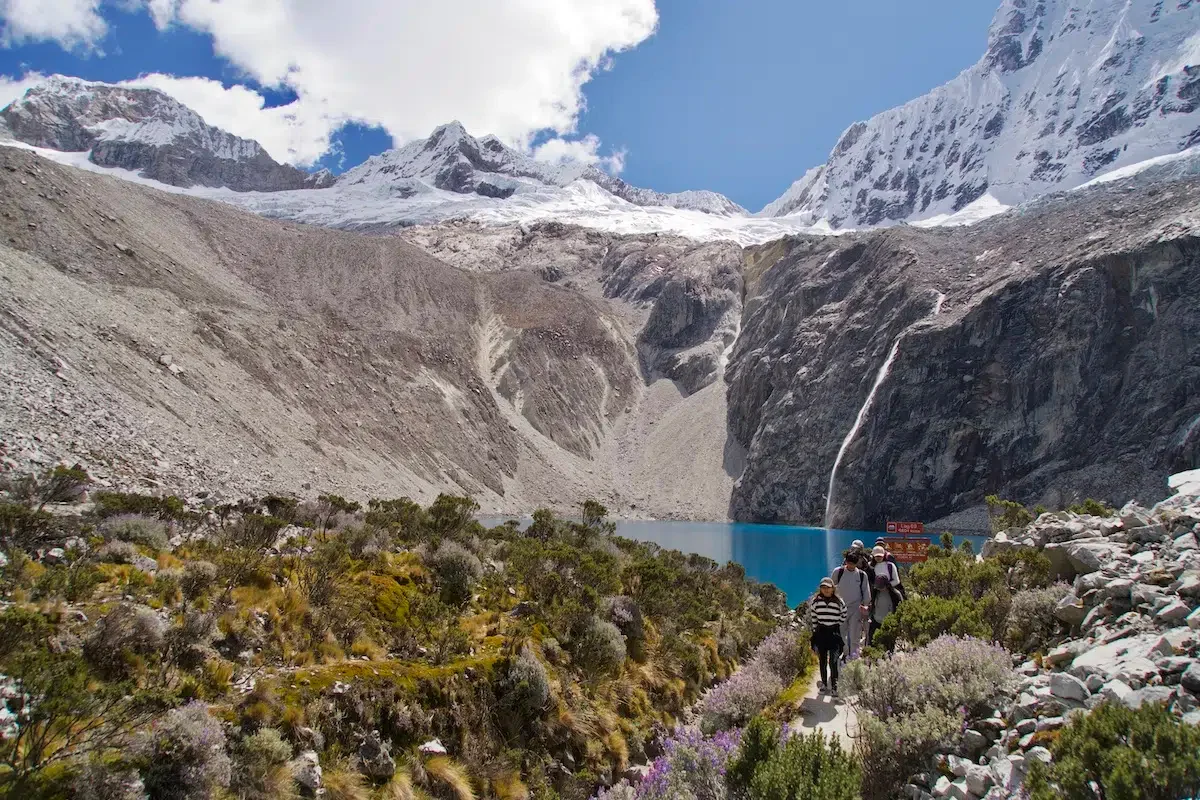
Laguna 69 is best after you have time to acclimate to the altitude. Photo by Heather Jasper
The trail starts at 12,795 feet, and the lake is at 15,105 feet. You’ll enjoy the trail much more if you’re not suffering from altitude sickness and headaches along the way.
Eating Cevichocho in Huaraz
After all that hiking, you will want some nutritious food to keep you going. Happily, Peru is home to over a dozen superfoods and Huaraz’s most popular dish, “cevichocho” includes two superfoods you probably haven’t tried before.

Cevichocho is a local Huaraz specialty. Photo by Heather Jasper
The first part of cevichocho is ceviche—fresh fish cured in cold lime juice. The second part is “chocho”, the seeds of a particular lupine plant. Wild lupine in both North and South America is toxic. Still, the Inca hybridized a domesticated lupine called “tarwi” in Cusco’s dialect of Quechua and “chocho” in the Huaraz dialect.
The other superfood served in cevichocho is “cushuro.” Some call it Andean caviar, but it’s an alga that grows in fresh water and high-altitude lakes. Cushuro are small, dark green balls with higher protein content than quinoa and more iron than lentils.
A Day at the Hot Springs
Cap off your trip to Huaraz with a day at the hot springs. Only four miles north of town are the Baños Termales Monterrey, big pools of naturally hot water that feel fabulous on sore legs. If you want to venture a bit farther, 18 miles north of Huaraz are the Chancos hot springs. Like Monterrey, there is a big pool of natural hot water for those who want to swim. Chancos also allows you to rent a small indoor private pool or a sauna cave.
There are seven caves to choose from. Each naturally maintains a different temperature ranging from 91.4°F to a sweltering 129°F. (I chose the 113°F cave, and it was plenty hot). The caves each have a private antechamber for changing, which includes cold showers. Inside, the cave’s natural stone walls and ceiling are hot to the touch and drip hot water. More hot water bubbles up from the cave floor. Each cave has a platform with benches, so you can walk around without cooking your feet.





Leave a Reply
Your email address will not be published.