




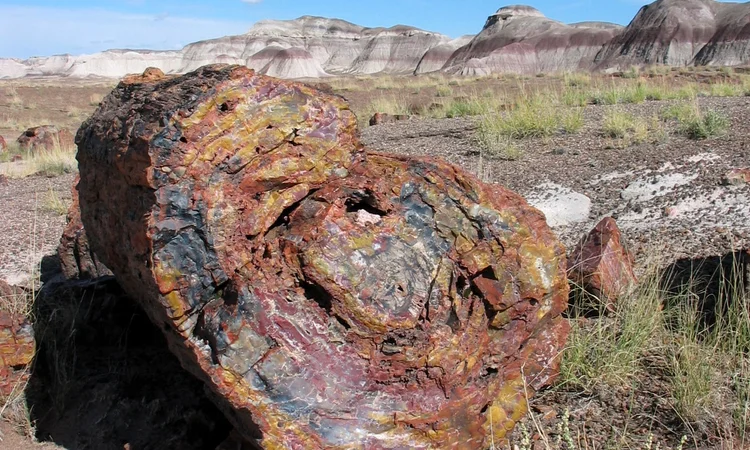
Petrified Forest and Painted Desert: Amazing Arizona Road Trip Destination
Wander With Wonder contains affiliate links and is a member of the Amazon Services LLC Associates Program. If you make a purchase using one of these Amazon or other affiliate links, we may receive compensation at no extra cost to you. See our Disclosure Policy for more information.
In northern Arizona, just over a three-hour drive from Phoenix, you’ll be transported to a rainbow-hued otherworldly landscape. The Petrified Forest and Painted Desert National Parks, near Holbrook, make for an ideal Arizona road trip. Both national parks are less crowded than popular destinations like the Grand Canyon and Sedona but are well worth a visit whether you are staying within a few hour’s drive or want a fascinating break from driving I-40 or visiting Route 66 sites.
Wander With Wonder contains affiliate links. If you click through and make a purchase, we may earn a commission, at no additional cost to you. We thank you for your help — it is what keeps Wander With Wonder bringing you great content.
It is possible to tour the Petrified Forest by car for an hour. This gives you a general sense of the tales these “logs” strewn across the high desert landscape can tell you about pre-historic times. However, I highly recommend spending a day visiting both the Petrified Forest and Painted Desert.
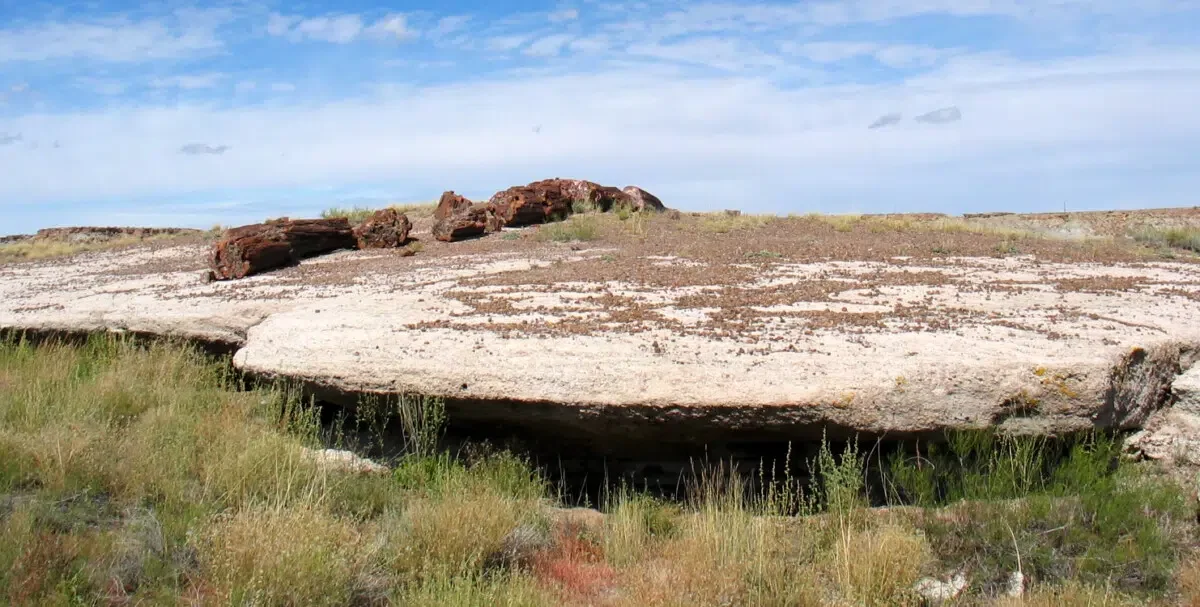
As you drive I-40, you’ll see petrified wood strewn across the desert and grazing lands. Photo by Elizabeth R Rose
First Stop on Your Arizona Road Trip: Rainbow Forest Museum
The Rainbow Forest Museum, with its paleontology exhibits and explanation of how the Petrified Forest came to be, is a must-see for visitors. This is an ideal first stop on your Arizona road trip.
It is here that you’ll also find out just how much bad luck can befall you if you take any petrified wood for souvenirs. Not to worry, I’ll recommend a place where you can pick up a souvenir at a reasonable price. The museum is a place to find out about park trails and interesting sites. Several trails start right at the museum.
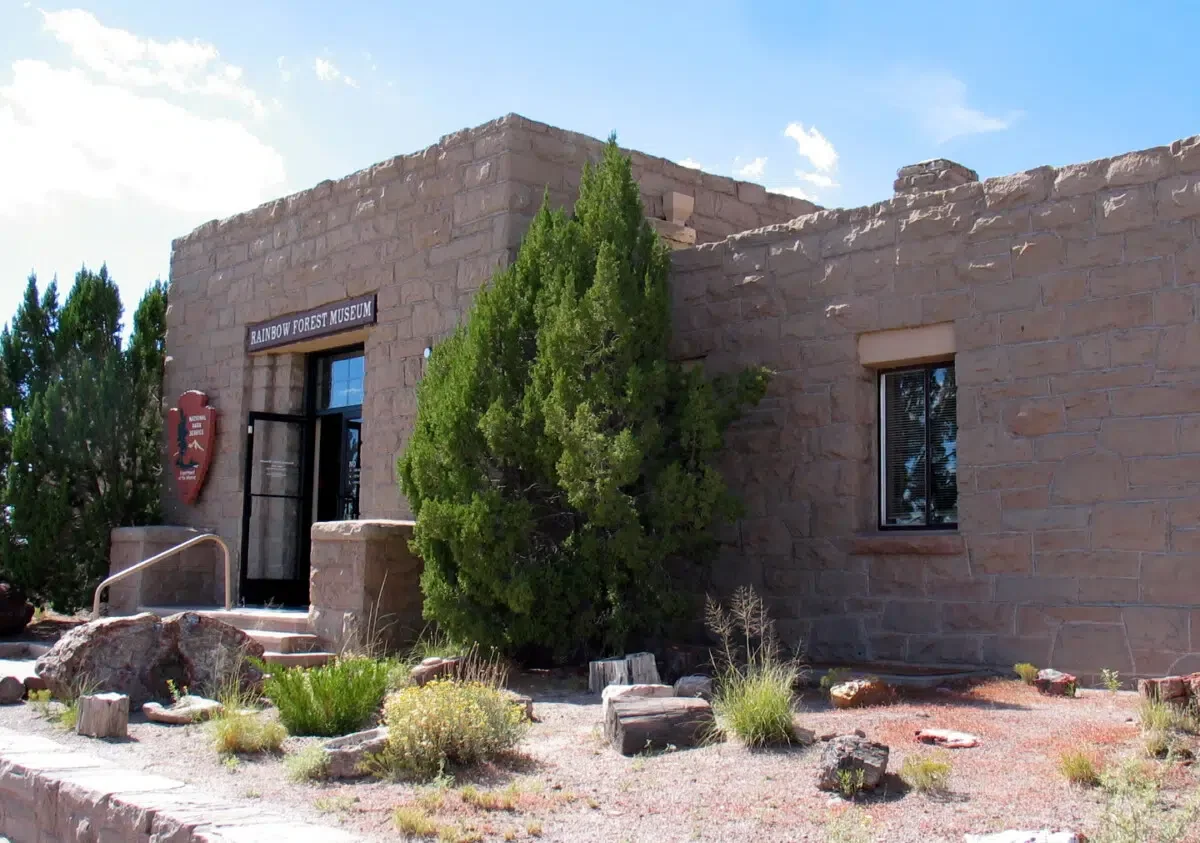
The Rainbow Forest Museum was built in the 1930s and houses paleontology specimens and stories about the National Park and Petrified Forest. Photo by Elizabeth R Rose
The museum explains the formation of petrified wood. 220 million years ago, this area was not a high desert. It was a verdant forest rich with animal and plant life. As trees fell and were washed away by rains, they became buried under mud and volcanic ash. The wood didn’t decay, since oxygen could not reach it. So, over time, minerals seeped into the log forms and hardened into the stone fossils you find today. Interestingly, evidence of humans in the Petrified Forest dates back 13,000 years. These early hunters used petrified wood fragments to make arrows.
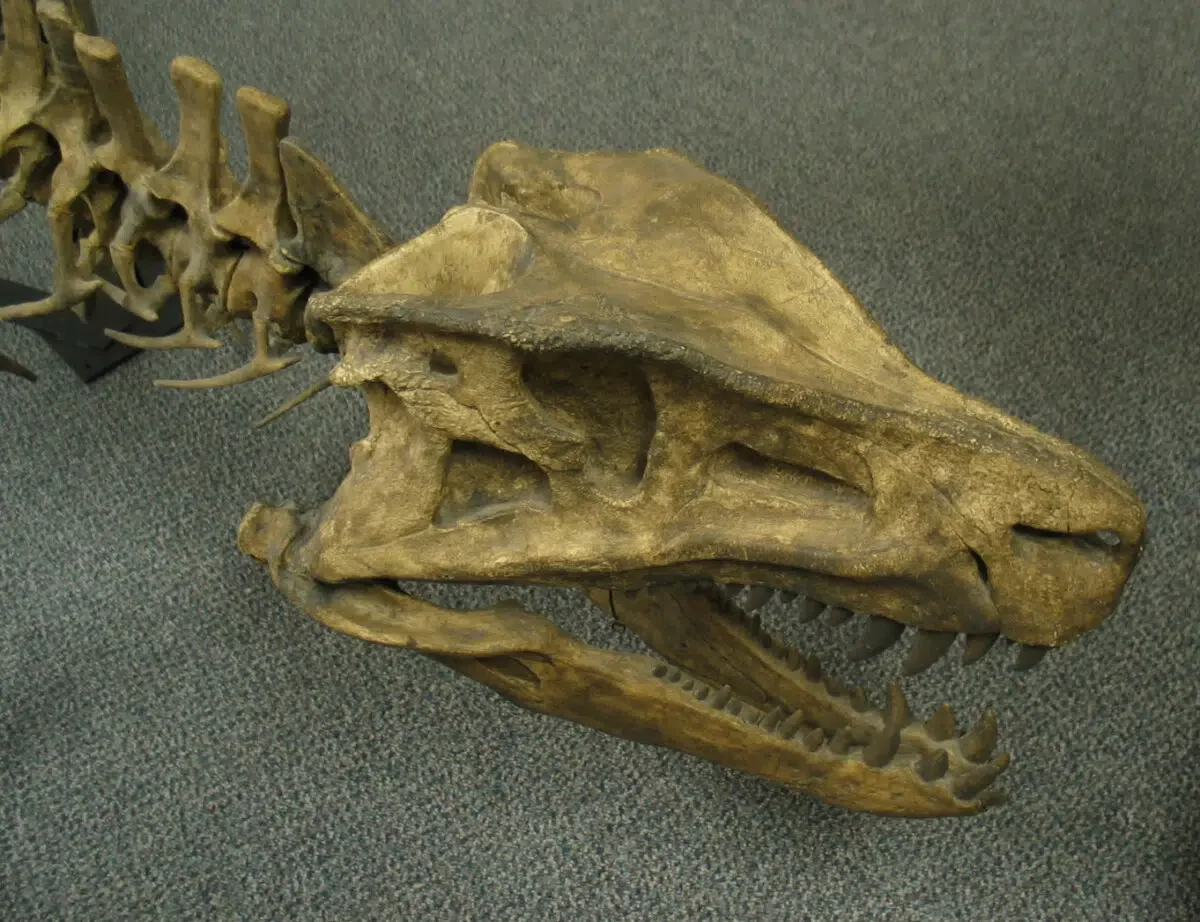
For the dinosaur fan, you’ll find this large skeleton at the museum. Elizabeth R Rose
The museum is part of a complex at the southern entrance to the park (take exit 311 off I-40). You’ll also find the visitors center, bookstore, gift shop, and small cafe there.
Trails and Drives Through the Petrified Forest
Of course, you can drive through the park in an hour, but taking several of the looping drives and getting out to follow a trail among the colorful logs will give you the most memorable experience. Be sure you take water, a hat to shade you and wear sturdy shoes.
While the Crystal Forest Trail (1.2-mile loop) is along a paved walkway and you’ll see plenty of Instagram-worthy logs, other areas are a bit more rugged and lengthy. Be sure and look for the crystals in these logs as you explore. And, leashed dogs are allowed on the developed trails (also bring water for them).
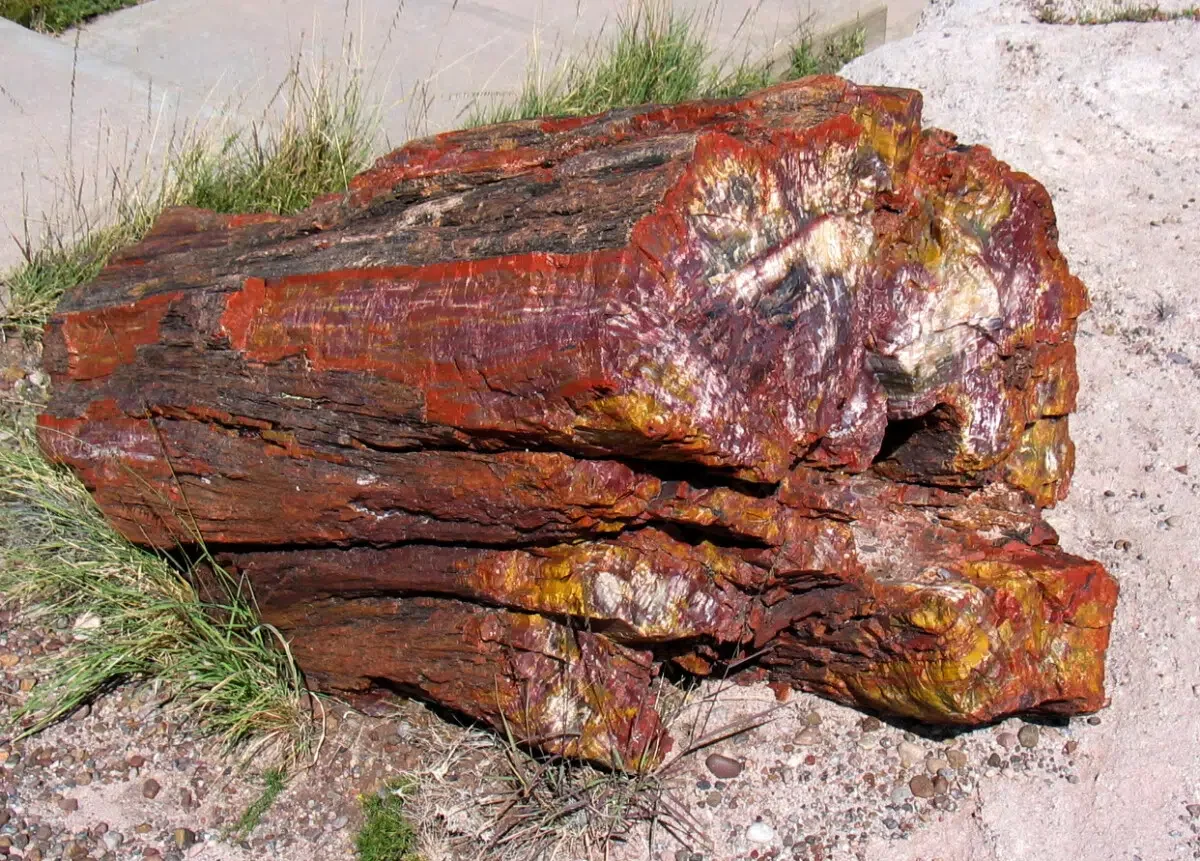
Multi-colored petrified wood is easy to see from the trails and walks in the National Park. Photo by Elizabeth R Rose
The main park road takes you along 28 miles, with parking areas and viewpoints along the way. Most people who are not doing the more lengthy hikes say that 1 to 2 hours on this road will make for a good short drive-through visit. Of course, add on time for the major attractions.
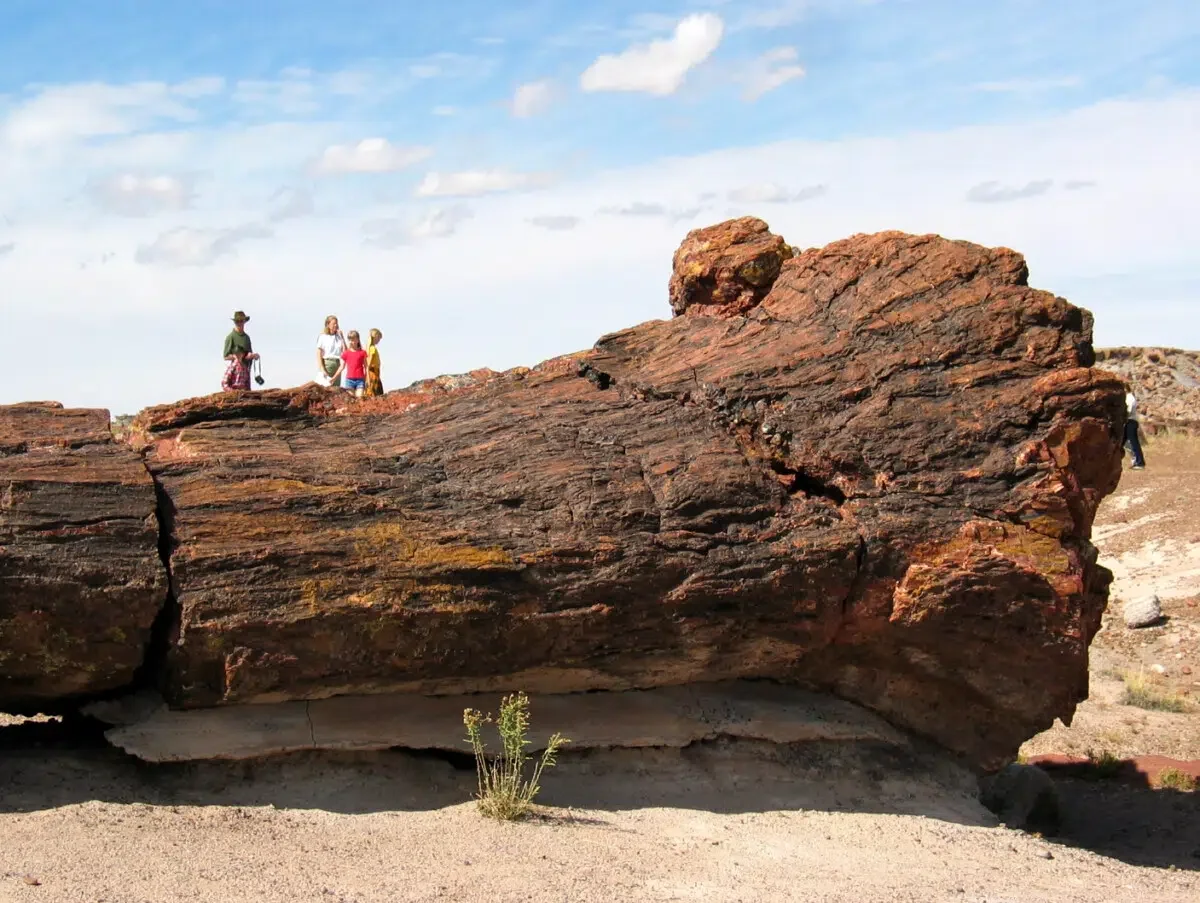
This huge log gives you a sense of what the forest was like in prehistoric times. You’ll find this on the Giant Logs Trail. Photo by Elizabeth R Rose
The 1936 movie, The Petrified Forest with Humphrey Bogart and Bette Davis has little to do with the park, but it does provide an interesting look at travel in the west before the establishment of the interstate highway system.
Agate House
A two-mile hike (the first part is paved) will take you out to see the fascinating Agate House, constructed of petrified wood, local rocks, and trees. It is believed that this building was part of a pueblo where people lived 700 years ago. The Civilian Conservation Corps reconstructed the ruins of Agate House in the 1930s.
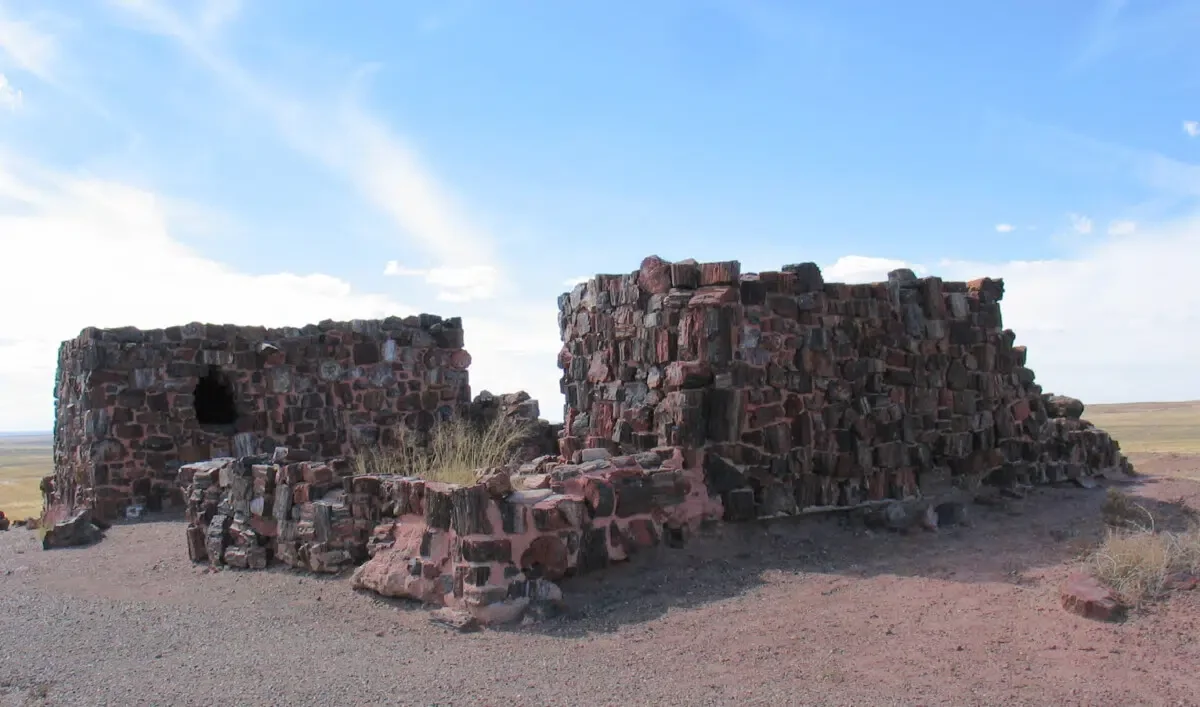
An early Puebloan structure, Agate House makes use of local materials including petrified wood. Photo by Elizabeth R Rose
The Tepees (Tipis)
There are more than petrified logs to see at the park. In the southern section of the park, you’ll find the cone-like Tepees formations between Newspaper Rock (petroglyphs) and the Blue Mesa Trailhead. If you enter the park from the southern gate, you’ll encounter these formations before you see other points of interest. These multi-layered badland formations date back over 220 million years and are the result of erosion through the many different layers built up over time. Under different lighting throughout the day, the colors and shadows change. You can hike down into the formations via the Blue Mesa Trail, a one-mile loop.
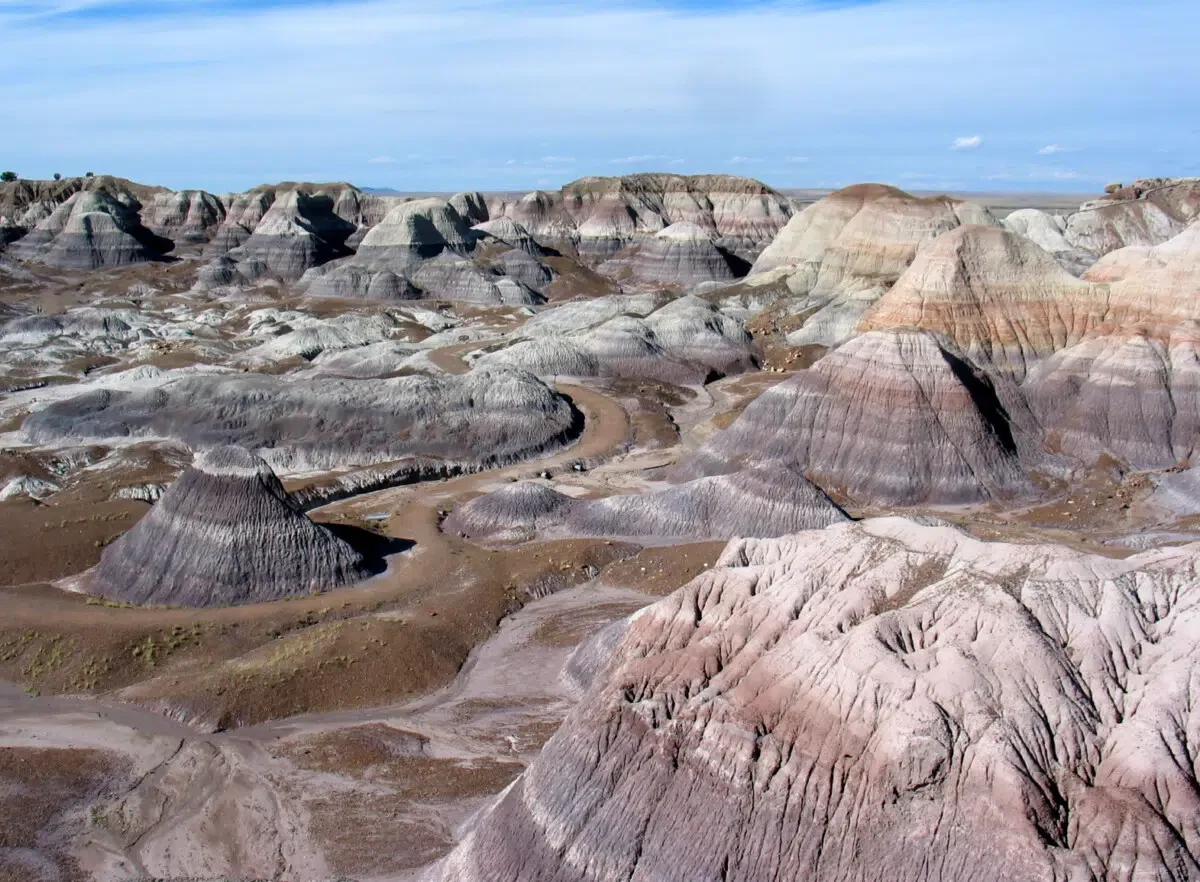
These colorful conical formations are the result of erosion. Photo by Elizabeth R Rose
Vestiges of Route 66
The Petrified Forest National Park is the only park in the National Park System containing a section of Historic Route 66. You can see weathered telephone poles along the original route and at the point where I-40 passes over Park Road, you’ll see the remnants of a 1930s Studebaker marking Route 66.
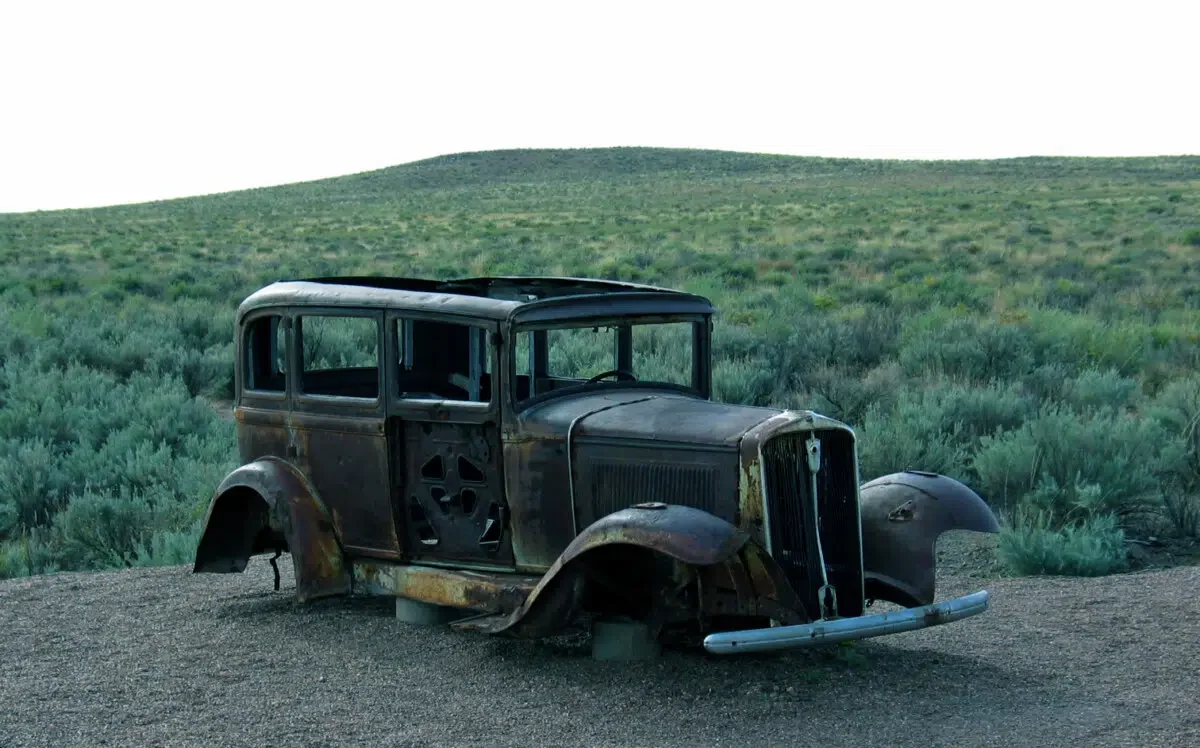
This old Studebaker is a remnant of the days when car travel on Route 66 was an exciting new concept. Photo by Elizabeth R Rose
Painted Desert
You access the Painted Desert from the northern part of the Petrified Forest National Park and is just across I-40. If you enjoyed the Tepee formations, you will fall in love with the badlands of the Painted Desert.
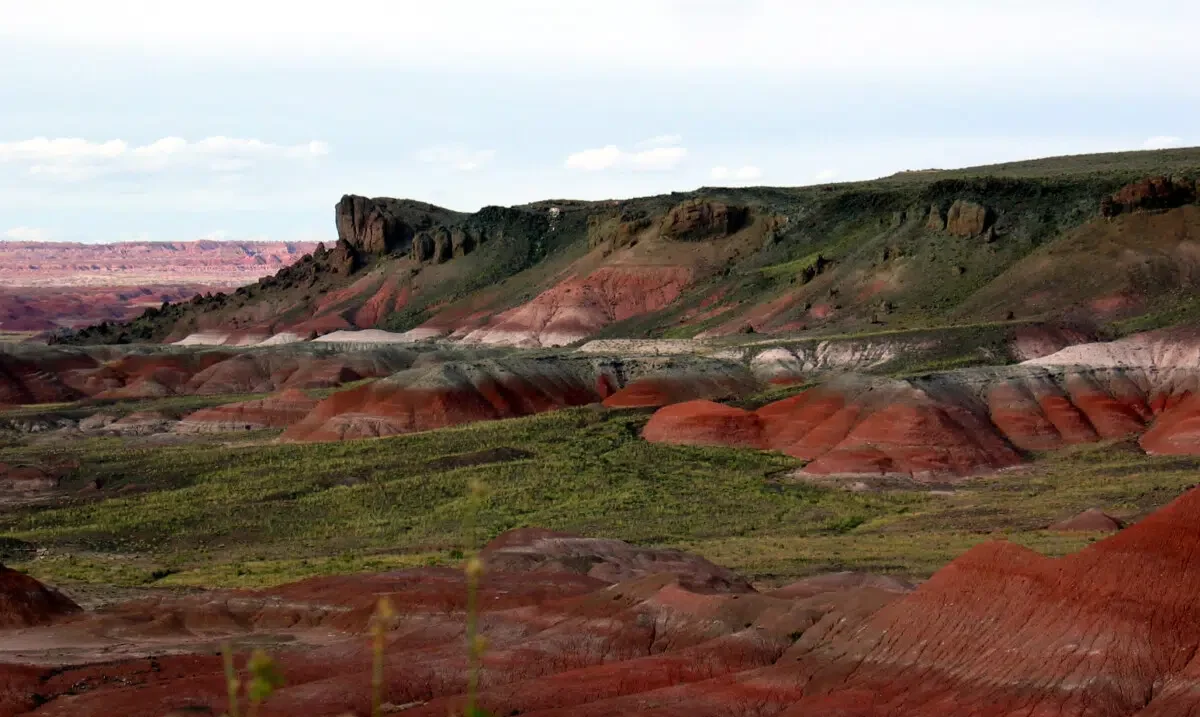
The colors of the Painted Desert are stunning. Photo by Elizabeth R Rose
Such color, especially at sunset, is awe-inspiring. Hues of orange, red, and grey color the cones. They stretch from the eastern border of the Grand Canyon all the way to this special place in the Petrified Forest National Park.
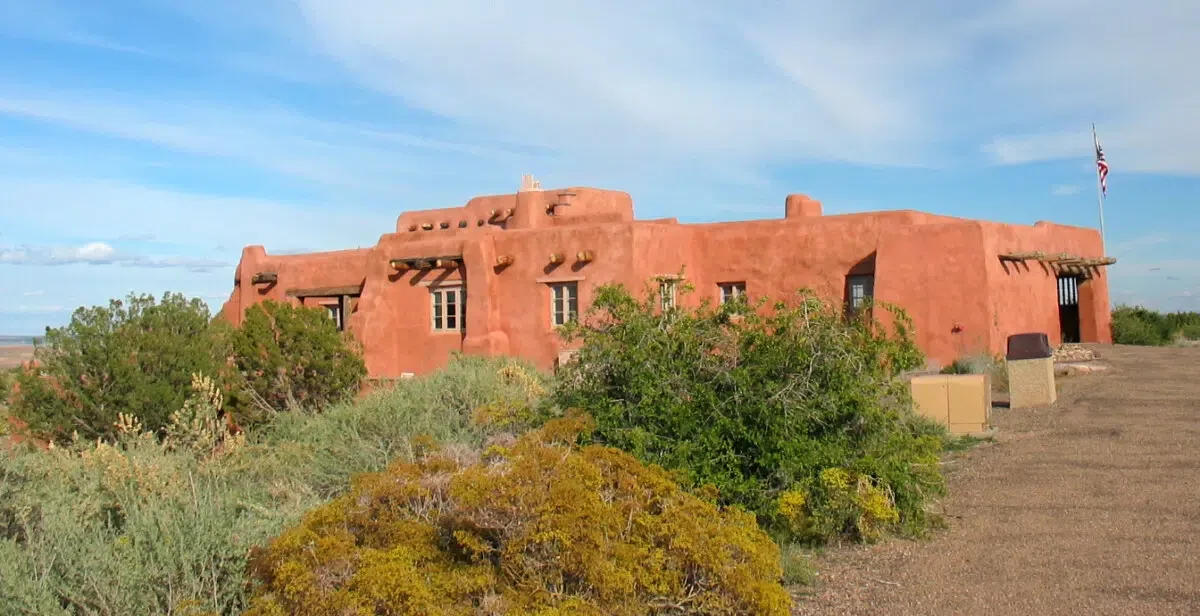
Once a beacon for travelers on Route 66, the Painted Desert Inn is now a museum. Photo by Elizabeth R Rose
Also worth seeing is the Painted Desert Inn, constructed by the Civilian Conservation Corps in the 1930s in the Pueblo Revival style. In the 1940s, the Fred Harvey company—famous for its railroad inns—ran Painted Desert Inn. No longer an inn and cafe, the building is now a museum. When it is open, you can see the punched tin light fixtures and Hopi paintings on the walls as well as vintage furniture.
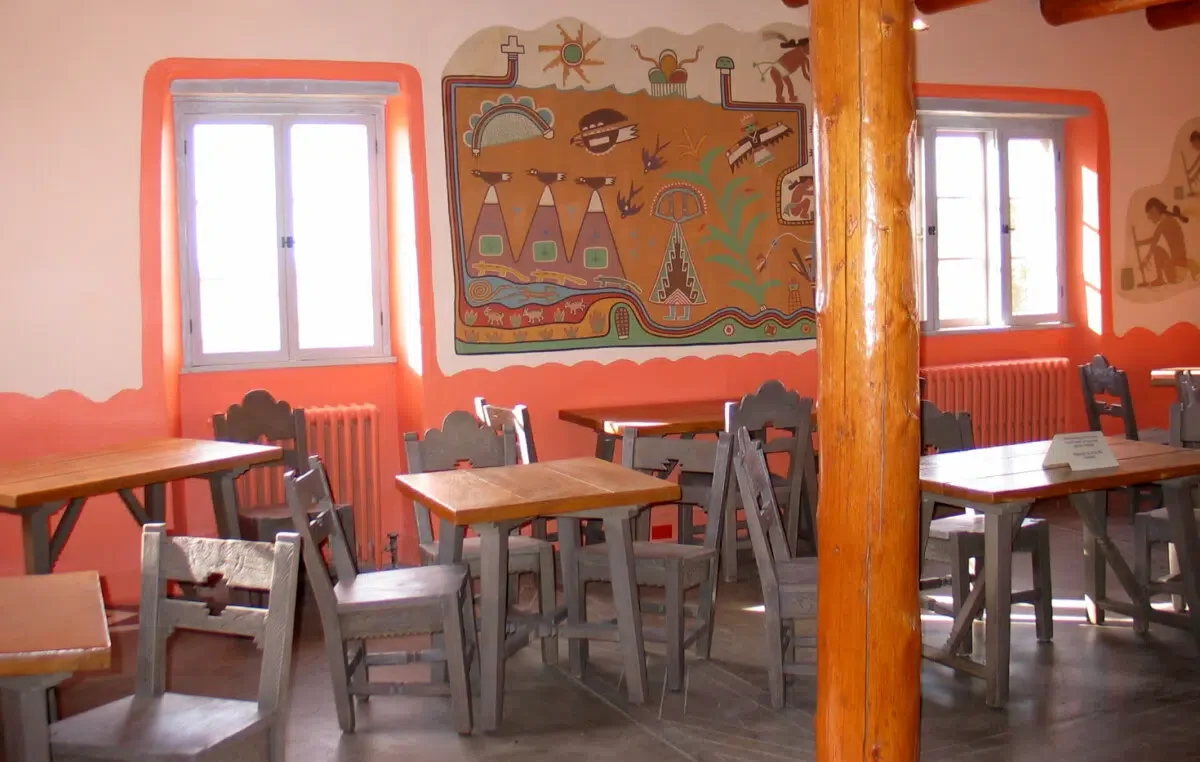
The Painted Desert Inn was once a cafe and inn along Route 66. Photo by Elizabeth R Rose
Shopping for Petrified Wood
When you drive along I-40 you’ll see plenty of “tourist traps” offering free petrified wood just to get you to come in and browse.
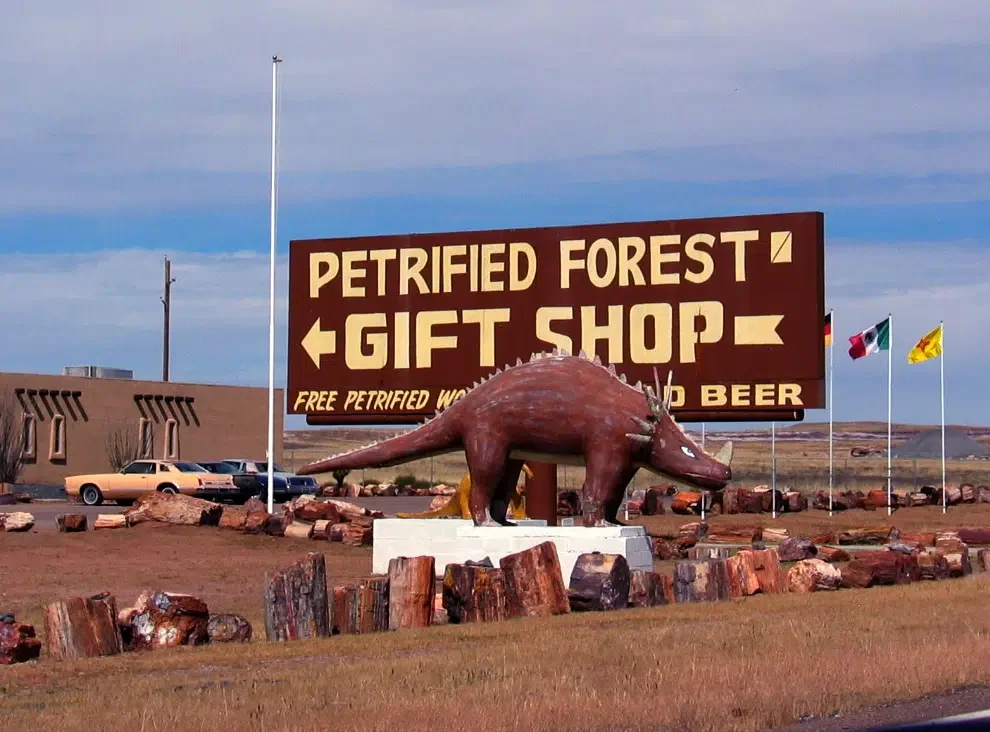
Fun, but very touristy. Photo by Elizabeth R Rose
Where to Buy Petrified Wood on Your Arizona Road Trip
While some of these places are kitschy fun, the piece of free petrified wood will probably be small and blah when it comes to the rainbow of colors you’ll find in most Arizona petrified wood specimens. But, as I mentioned, you cannot simply pick up a souvenir off the ground while you are in the National Park.
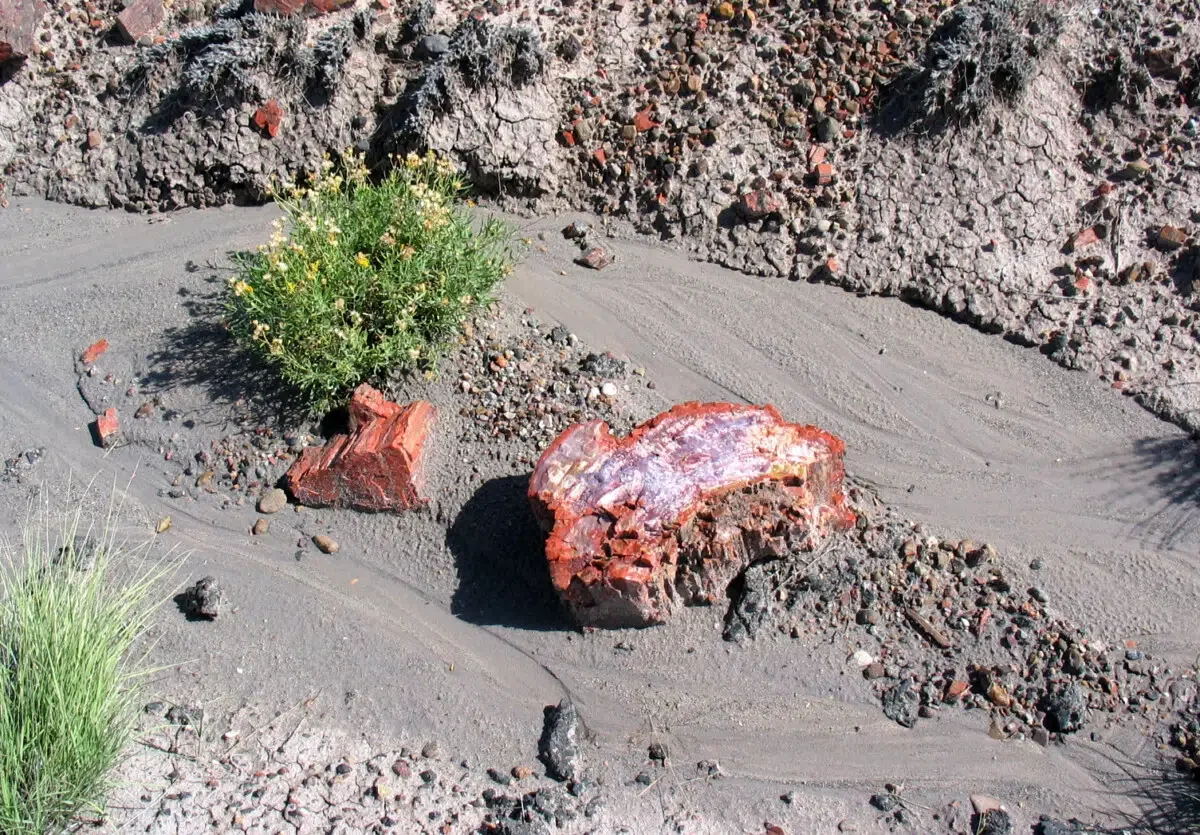
It’s just a small piece in the muddy wash but don’t be tempted to pick it up within the park or danger may befall you! Photo by Elizabeth R Rose
The museum illustrates the sad tales of people who have done that. They have a display showing letters from people who are sending their ill-gotten specimens back to the park sharing tales of woe. So if you don’t want bad luck to befall you, check out reputable shops like Jim Gray’s in Holbrook.
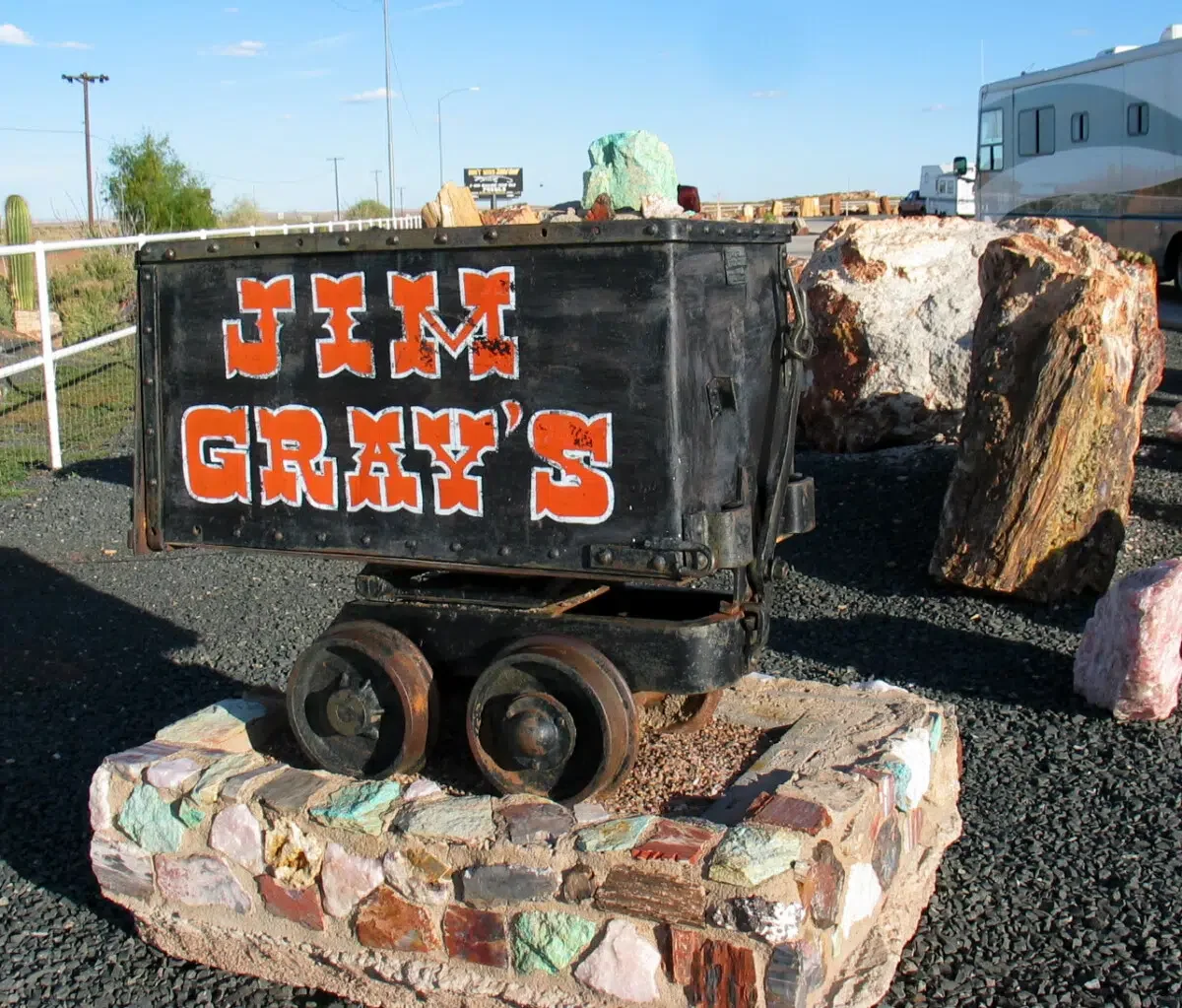
Jim Gray’s Petrified Wood Company. Photo by Elizabeth R Rose
You’ll find both Arizona and foreign specimens of petrified wood, often highly polished. I purchased one of these smaller rounds for about $20 and display it with my other polished stones from my travels throughout the southwest.
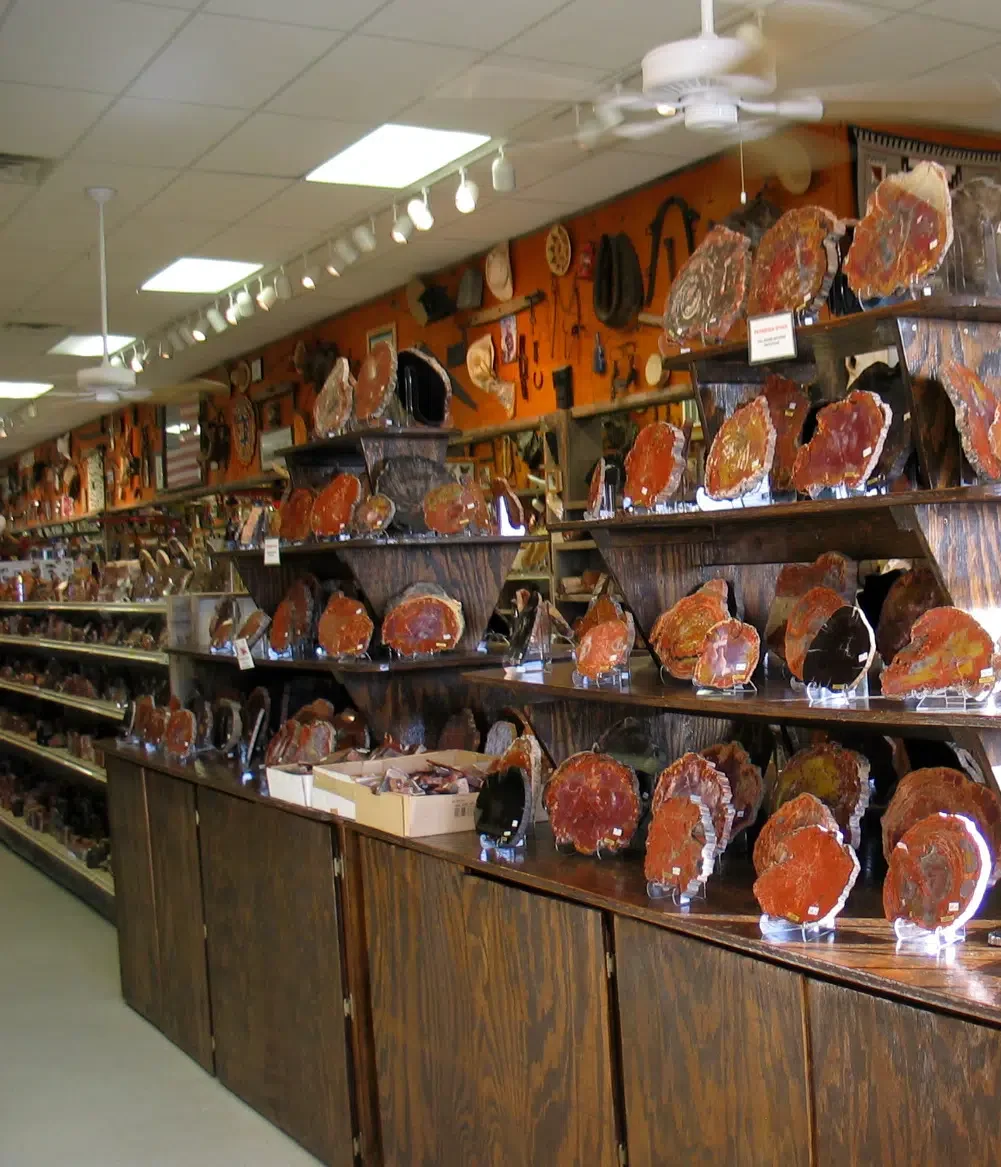
Jim Gray’s is worth a visit to see the meteorites, fossils, and petrified wood. Photo by Elizabeth R Rose
And, if you want something really showy, how about this highly polished large round made into a table supported by natural wood.
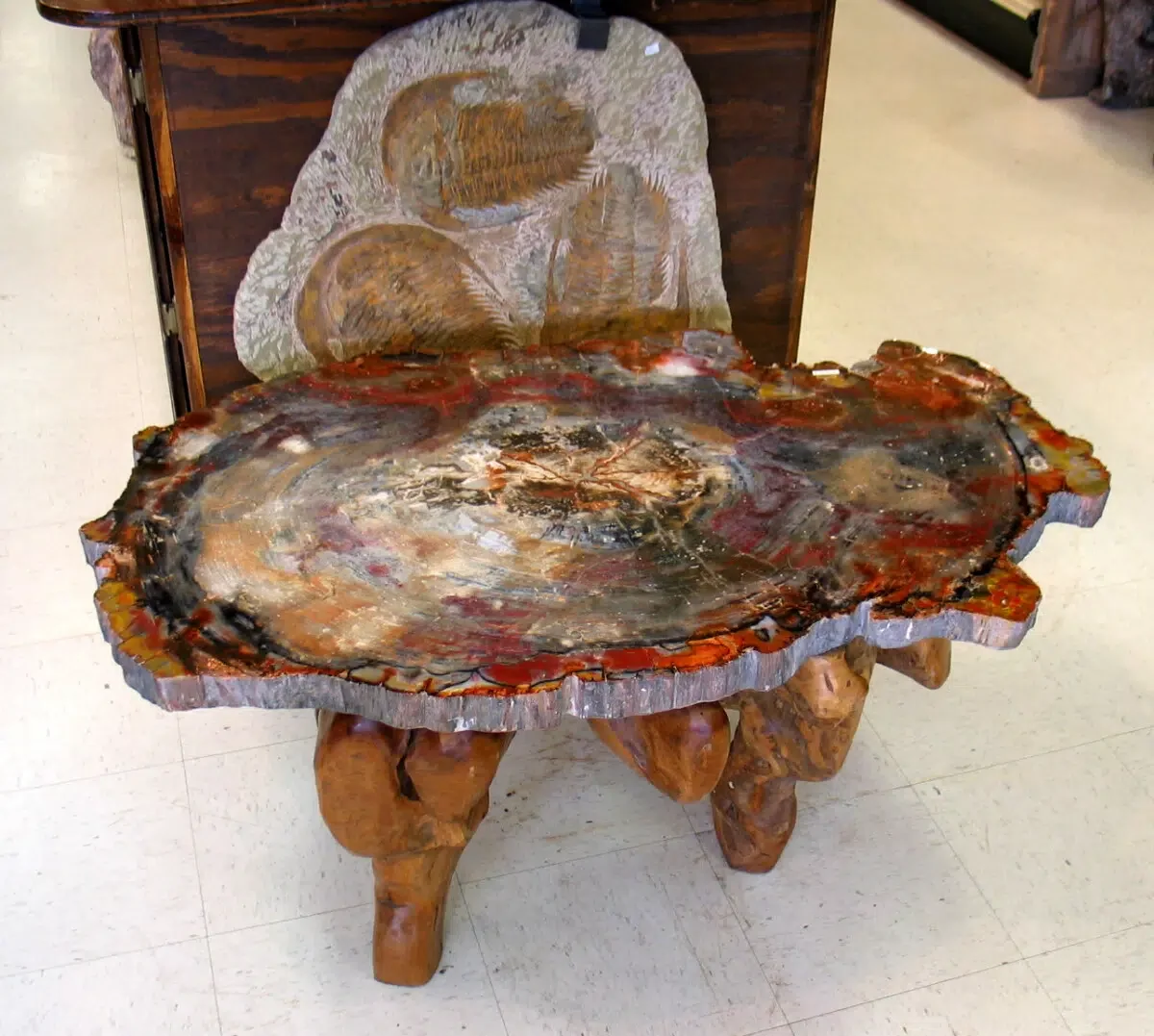
Petrified Wood Table at Jim Gray’s. Photo by Elizabeth R Rose




Leave a Reply
Your email address will not be published.